Showing posts with label project. Show all posts

Tuesday, 2 March 2010

Compartmentalization, Encapsulation, and Isolation, oh my!

I've been focusing a lot on these inheritance features today. I know, for instance, that I can create a class Planet, and that I can also create a class Moon extends Planet, so that the two are differentiated in name but don't need repetitive coding. I've been considering the pros and cons of making all of the attributes I've taken to calling low-level attributes (a planet's name, for exmaple... the things that the object stores that don't reference other objects) implement a custom interface.

Time for some explaining? I think so. In Java, a class (known as a child or a subclass) can extend another class (known as a parent or a superclass). This means that, unless an underlying method in the child overrides the parent's method (this is done simply by creating a method in the child with the same name as the parent's method), the methods defined in the parent are equally as applicable to the child. In the case of class Planet and class Moon extends Planet, as above, the method getSize() would return a number representing the planet's diameter, and would do the same for a Moon even without explicitly rewriting the code.

Now on to implementing interfaces. An interface is an abstract class, which means that it cannot be used directly. Instead, when a class implements an interface, everything written into that interface MUST be overridden by the new class. If I have attributes, to use the example above, which all have different variables within them (say, a description attribute holds text describing the object, an armor attribute holds a value representing the armor's strength), I can create an interface that defines getType() and getValue() as methods that MUST be overridden, therefore making the attributes universal in structure.

A Java class can extend only one parent lass, but can be extended by infinitely many children. A Java class can implement as many interfaces as it wishes, so long as all of the underlying methods are overridden. Because of the way these two aspects of "inheritance" work, they are known as two related but separate pathways of defining a new class. By making a new class a child of a parent class, you are inheriting behavior. That is to say, all of the 'hows' in the class are defined by the parent class, except for the occasional overriding method or additional method. By having a new class implement an interface, you are inheriting structure, because the layout of the new class must match the interface, but the specific algorithms used are specific to the new class.

There's my brief lecture on Java's inheritance. That out of the way, I haven't done coding work today, seeing as I instead attended a showing of "Willy Wonka and the Chocolate Factory" (that's right, the original) at the University. I did get a lot of (additional) thinking in and I realized one of the shortcomings in the current embodiment of the interpreter I showed yesterday. I have a button that is specialized for the window I showed you, not one I can place into just any window I place the graphic into. This also means that when I go to make a more capable "administrator" version that allows me to generate material codes on-the-fly, I'll have to completely reprogram that button.

Instead I can use some nifty features of Java's by including a specialized button subclass into the class that creates the material graphic. This subclass would be inherently tied to the material graphic that the button updates, and wouldn't require any coding except placement in the larger window.

Overall this would greatly increase the capabilities of the materials panel I've made, as well as the capabilities of any future classes I make. I consider this Compartmentalization (and I think the textbooks agree with me) because it means that any frame that uses the MatCodeInterpreter will, without extra work, be able to add the necessary buttons and fields to manipulate it.

I think tomorrow will see me working on making that a reality.

Thursday, 25 February 2010

CRC Cards and How I Killed a Small Forest

Class, Responsibility, Collaborator. Those are the three things that go onto a CRC Card--the name of the class to be made, what that class does (including what data it stores), and which other classes this class interacts (or, as the name suggests, collaborates) with.

These cards are recommended as a tool for designing an object-oriented program. I do see the usefulness of them. That said, writing 41 CRC cards is not exactly the most entertaining way to pass time. And that includes a couple of cards that I finally decided to generalize, since some things like Ship, Vehicle, and Troop designs all actually contain the same thing and could, as a shortcut, be written on one card.

That said, I haven't gotten to programming yet but I've already seen a payoff from the cards in the form of an organizational hierarchy starting to form. I've got a list of seven classes that don't appear anywhere in the application, but will be great to add in as abstract parent classes. That is to say, I can make these classes with a set format but no data, and then make "child" or sub-classes that take that general structure and specialize it to their needs. It should also allow me to easily compare certain values.

As an example, a station could be built at any point of interest in a system, whether it's orbiting a planet, a moon, a star, or whatever else. Rather than having to store in the station's information both the name of the object it's stationed at and the type of object that is, by having all of these other objects (stars, planets, etc) as children classes to the overall Location parent class, I can simply have the station's location compared to anything that is a child of Location.

This will also work for fleets for current, and target, locations. As I said before, I haven't coded yet, so hopefully it'll work out half as well as I'm imagining it will, but it's nice to see things like this falling into place.

My plan, for the moment, is to develop the GUI class(es) next. I hope to have all of the GUI defined in one class, so that it can share a few easily-redefined variables, and then whenever I need a certain window I'll have the code handling that window call it from the list of already-created objects in the GUI. The intention is that when the user first starts the program, they'll be prompted with a login window where they enter their username and password, as well as being given either a list of display resolutions or a full-on configuration window (depending on how many things there actually are to configure). Personally, I'd like the application to run full-screen, but one of the options will most likely be a windowed mode. I did write up a little "Hello World!" fullscreen application, because I actually was doubtful that Java could even do that. It can, and therefore I intend to work with it.

When I say  I'm developing the GUI, I mean the bare minimums. Rather than dealing with test programs for all of my stuff, I'd like to just plug in the code to the GUI I'm actually going to be using. Formatting of that GUI can come later, since as far as the code is concerned, the button can be gray with the word "Exit" on it or it can be a picture of an open door, it's still the same object.

I have a lot of time tomorrow so definitely expect some preliminary work on the GUI to be done for my next post. I might even post screenshots, not that they'll be pretty.

Wednesday, 24 February 2010

SQL Concurrency versus JDO, and why I want to make the switch

Small update tonight. I managed to not do much tonight except think. And think. And plan. The outcome is a decision to "scrap" what I have so far on the simulation and start new. Including, (most likely) the database.

And here I was promising the material decoder, huh? Not that it took very long to get nearly finished with that. Another couple of days and I'll probably have that finished, I just need to go through some organization first.

So what am I changing in starting new? Let's go into one of my standard bullet lists:


  • (Probably) Removing the SQL from my side of the coding by using Java Data Objects.
  • Creating classes for the different objects (like planets and ships) rather than tables per se.
  • Truly attempting to take advantage of the object-oriented nature of Java, a la Budd.
  • Avoiding so-called "Concurrency" issues
  • (Probably) Making the code easier on me to develop.
Java Data Objects, or JDO, are a method of storing entire Java Objects within a database. In my case, by creating a class for each in-game item, I can then store the classes in the database. This becomes useful in terms of the concurrency issues mentioned above. Concurrency in SQL is a problem where multiple users attempt to access the same data at the same time. When one person edits the data, the second person may well overwrite those changes even though the information they based it off of is no longer accurate. Generally this is handled by locking the row, so that only one person can access data at a time.

This is a major problem in my program because of the nature of the database I built, and how it would be accessed. The database is built with 'foreign keys,' or references to other tables, so that all of the data is interconnected. If one user is accessing all of the necessary data to run their empire, then a significant portion of the database is locked up while they're doing that work. Not a very user-friendly methodology. On the other hand, if the planets and ships and everything else are stored as independent objects, the user only accesses those that belong specifically to them and there aren't concerns about simultaneous edits.

I'm not too well-versed in the JDO things yet (I've just stumbled upon them today, really), so I'm not certain, but I do get the impression that using JDO means not needing to use SQL, and this simplifies my coding as well as removing the SQL altogether. Unfortunately, while I've found books that cover JDO, I can't find any at a library near me. I'm considering purchasing a copy somewhere off the web, but for now I'm going to try using the online documentation for it. Until I run into major issues, I'll probably stick with that.

My next couple of days are pretty slim in terms of time spent in-school, so hopefully I'll have a nice structure fleshed out and work started by... the weekend, at the latest? Wish me luck on that!

Tuesday, 23 February 2010

The Platypus: Object-Oriented Programming Primer

So, about that material decoder. Maybe tomorrow? I didn't have time for much coding today, but I have done some reading. Platty Pat apparently has been given the name Phyl by the author, but I like Platty Pat better so I'm sticking with it.

So what is Object-Oriented programming, anyway? According to this book (I need to give credit where it's due, so the book in question is: "Understanding Object-Oriented Programming with Java" by Timothy Budd. ISBN: 0-321-21174-X for my particular version), it's all about creating code in sections, called objects, which are essentially independent. Each object has its own responsibilities and its own way of accomplishing the tasks set out for it. In principle, there should be only a couple of interconnections between objects, and objects should be reusable from project to project without major restructuring. The program should also be separated such that major feature changes (graphical updates or saving to a different format or what-have-you) should only take updating one or two of the objects, as the other objects don't rely on what's in the other things, but what comes out of them.

I've been reading a bit about the class-oriented nature of Java, which, as I've said in the past, is the biggest part of what the book is about, and the biggest thing about Java I feel I need to understand more clearly. It's the reason there's a platypus on the cover of the book, because if you extend the class structure to real life, the platypus 'extends' the 'class' mammal but 'overrides' some 'methods,' primarily birthing. Anyway, basically a convenient metaphor that sums up a lot of the features of class-oriented programming.

Right now they're going through the design process behind it all, and it certainly is a lot different than what I've done so far--a kind of disappointing fact considering most of the books I've studied have been based around Java, so it would have been nice if it had started with Object-Oriented facets of the language. That said, given my as-yet limited experience with programming, it shouldn't be hard to switch to their methodology, which definitely seems like it would help.

It's interesting stuff and it's something I'm definitely going to take into consideration. Especially on account of the conversation I had today with a friend about my plans for the Simulation. He feels it'd be better for both sides if the administrator was cut out, to save time and all. I'm still intent on allowing complete customization though, which can't be done without the administrator. If I properly program this, I should be able to pretty easily try both. So I guess that's one of my new goals for the project. Keep in mind that one of my favorite things about PC games, and the reason I prefer them to console games a lot of times, is the fact that they can be modified. Mods can extend the life of a game quite astonishingly, and the customization is a key selling point to me. That's probably why I'm so set on making the simulation with the administrator-figure.

Also I managed to stumble upon Google Code, a resource for developers. Apparently a ton of Google's stuff is available for use by independent coders like myself. I might have a go at it sometime, but for now it's conveniently filed away that if I ever have a project that could take advantage of it, it's there to be used.

Sunday, 21 February 2010

Kicking a Dead Horse

My ISA calculator is done. I've left out the US Standard Atmosphere calculations from it, simply because if I were to add it now I'd take the cheap way out of simply converting the input to metric, then the original outputs back into US units. This would be a little bit inefficient and a bit inaccurate, as the different standards are bound to use different conversions than I would. If I ever want to add in that function, then I'll do it proper.

That said, I did change most of the other things I found to be lacking:


  • Now takes advantage of normalized units, which means the window can be resized (relatively) without problems. Resizing it will allow the table to be viewed without a horizontal scrollbar, and in many situations without a vertical one either.
  • No longer recalculates if the values entered at the time of giving it the calculation command are the same as the last values used.
  • Fixed a small bug in which if the user clicked the same plot button they were already on, they'd receive a dialog stating "Unknown Plot Type Error." Turns out, the error was simply that none of the plots were selected. If that situation comes up now, it simply returns out of the statement, leaving the last-selected plot in view.
  • Pressing enter in a text input box now calculates as necessary.
MATLAB itself has some shortfalls which prevented proper fixes for the recalculation bug and the axis tick mark problem. The first problem is that it's not easy (I'd like to say not possible but that almost always is proven wrong) to have more than one "axes" object in the same GUI. I wanted, originally, to have one set of axes for each plot, and simply hide/show the different axes as requested. Unfortunately, as MATLAB denies me this option, every time the user selects a different plot type, MATLAB has to go through and re-position all of the data points on the set of axes. While it doesn't need to calculate all of the values again, the plotting itself definitely appears to take longer than the calculations, as there's no noticeable decrease in time between inserting fresh values and just switching the displayed plot with the same values.

The second problem was axis tickmarks. The problem here is that the tickmarks have to be manually declared as exact values. While it's not incredibly hard to calculate a vector of values rounded to the nearest thousand or something, the requirements are so contextual to make it a mostly useless bit of extra programming. What happens when the user only wants to see the range of heights from 0 to 25m? From 1276 to 8452 meters? From 0 to 100 meters, in 520 increments? I think you see my point. MATLAB's automatic tickmark decisions are vaguely useful enough to allow them to be the only ones.

So, that said, my work is done.You can find, look over, criticize, and hopefully provide feedback on the source code at this link. I'd expect to hear things along the lines of "it's horribly inefficient," "I'm amazed this works at all," and "YOU SUCK!" so feel free to be brutal, as long as there's some sort of suggestion for improvement alongside it.

Expect to hear progress on my Java simulation tomorrow! Probably a working, if preliminary, version of my material decoder at the least.

Project Introduction: Java Simulation Game

While I'm doing some fine-tuning on the MATLAB project before posting the code, I figure now's a good time to introduce the other main project I'm working on. This one's a bit more complex and will probably be in production for ages (an unfortunate side-effect to lack of deadlines).

The simulation game I know and love doesn't really have much in terms of graphics. It's much more a thought-based, economy/diplomacy/strategy simulation, with rules governing interactions, extraction and deployment of resources, and the like. If you have an imagination, it's a real fun game to play because literally anything is possible--you have an administrator or two running it and keeping it balanced, but otherwise if you can think it, it can be done. My version, and all the ones I've played, are sci-fi, galactic empire style games. You rule planets, not cities, basically.

In the versions of these games that I've played, the major downfalls were (discounting admin inactivity and small player base):


  • Problems with cheat-detection. All of these I've played so far were excel-based (or worse, simply forum-based), meaning if a player modified the excel file it becomes tough to notice it.
  • Reliance on other players. As all interaction requires a response from someone else, things went slow. For diplomacy and trade, this isn't a problem. But what happens when your fleet is at another player's planet, waiting for the other player to respond to continue the battle, and another enemy comes to your planet knowing you've got no defenses?
  • Lack of 'realism.' Mostly in the fact that the player controls EVERYTHING in the past games I've played, which makes playing tougher. Sure, it's nice having absolute say over everything, but it isn't necessary and adds a lot of work.
Therefore I've set out to create my own version of the simulation-style game:

  • Programmed in Java, with no access to source code, to prevent cheating but allow essentially any computer to run it.
  • More administrator decision-making. A player entering a battle will get to dictate what the general strategy is, what the main targets are, under what circumstances the forces are to retreat, large-scale strategic things like how much of the fleet actually enters the battle to begin with and what remains as mid-fight reinforcements. The defending player then gets told what he knows of the situation (the ships currently in the fray, essentially), and issues main targets and defense objectives. The generals do the micromanaging, and the end result is a battle decision created in a short time through the administrators.
  • The concept behind my game in practice is that the leader does leader things. The economy is essentially entirely controlled by the player, but research is done more true-to-life. If a player wants to develop a new fighter craft, they don't tell the admin what exactly goes into it and receive a yes/no answer as to whether it works. Instead, they put the offer out to companies, who create prototypes and bid on contracts, and it's up to the player to choose from a few different options given to them.
Now, some of you may be thinking "this really doesn't sound like fun." For many of you, that'd actually probably be true. This style of game is certainly not everyone's cup of tea. Do bear in mind it isn't simply number crunching. Every action has an outcome on the whole of the galaxy, based on other players' political responses and the NPCs. And a battle doesn't simply go: X ships vs Y ships, Y wins, no ships remaining for X, Y-n ships remaining for Y. It's the administrator's job to narrate, tell a story, and entertain.

Some other features I'll be including in the game concept are:

  • Realistic (pythagorean-theorem based) travel times via galactic map coordinates.
  • In-depth trading system. All planets will have some of a predetermined list of resources, and most will have their own unique (though questionably useful) resources. Probably will also include a materials market much like the stock market, based on quasi-realistic supply and demand.
  • Through the material system, potentially interesting design quirks, waiting to be discovered, in nearly everything. A leader may find a nasty surprise waiting for him when he suddenly discovers his troops are carrying extremely magnetic weaponry, and his enemy knew this before he did, disarming them by way of electromagnets (for a top-of-my-head example).
  • By definition, each race will have (aside from preset starting 'equipment') completely unique armies, infrastructures, and economies.
  • Dynamic game structure--because the game is coded by the eventual administrator, things can be changed. Want to play a socialist utopia? The economy for your race can be re-coded to be more befitting. For example.
  • Espionage that provides both real and incorrect data, and most often time-sensitive. You'll be more likely to find out an enemy fleet's location than its composition. Like the real-world, using acquired intelligence is a gamble that can have huge rewards.
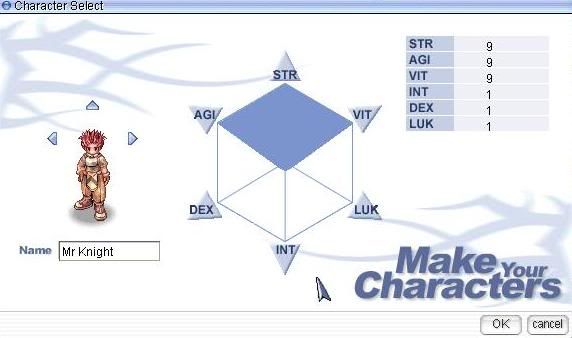
My current status is pretty bleak. The MySQL database structure to go behind it is essentially complete. It's a complex mess of inter-related tables, but it covers essentially everything. The Java work I had done (which was almost nothing anyway) is lost to my last computer wipe, but I've started fresh and am currently at work coding a material property display. Each material has 11 properties, with a range of values from 0-25 (Z-A respectively). I'm working on a 'decoder' that displays the properties in one of those attribute 'star-charts.' The only example I can find easily is this. Imagine the colored section moving around to fill in the shape depending on how high each stat is. Mostly I'm making this for my purposes so I can try to visually see the balance between materials found on varying planets.